Proposal:
A better way to tax alaska’s minerals
In 2024, Alaska’s mines produced nearly $4 billion worth of minerals, about 12% of all the metal produced in the United States.
Yet despite that enormous production, the Alaska Department of Revenue told the Senate Finance Committee that the state’s Mining License Tax actually produced negative revenue for Fiscal Year 2024 because of one-time accounting adjustments and lower metal prices the year before.
That doesn’t make much sense.
When Alaska’s publicly owned minerals are being produced at record values, Alaskans should receive a fair, stable return from those resources.
Walker Hoffbeck believes Alaska can do exactly that while remaining one of the best places in the world to invest in mining.
Their approach is built on four simple principles:
Fair to Alaskans
Competitive for investors
Transparent for taxpayers
Sustainable for future generations
What’s the problem?
Today, Alaska taxes mining companies based largely on their profits.
The problem is that profits can rise and fall because of accounting rules, expenses, or temporary market conditions, even when mines are producing billions of dollars’ worth of minerals.
That makes state revenue unpredictable and difficult to plan around.
The Walker-Hoffbeck Solution
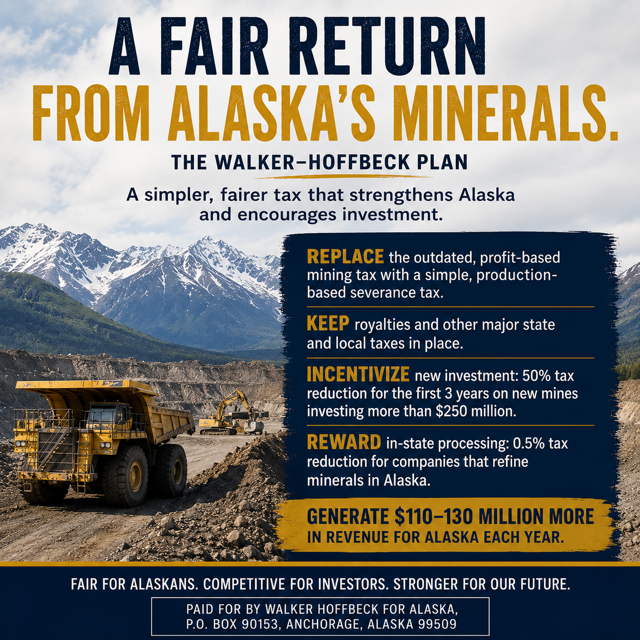
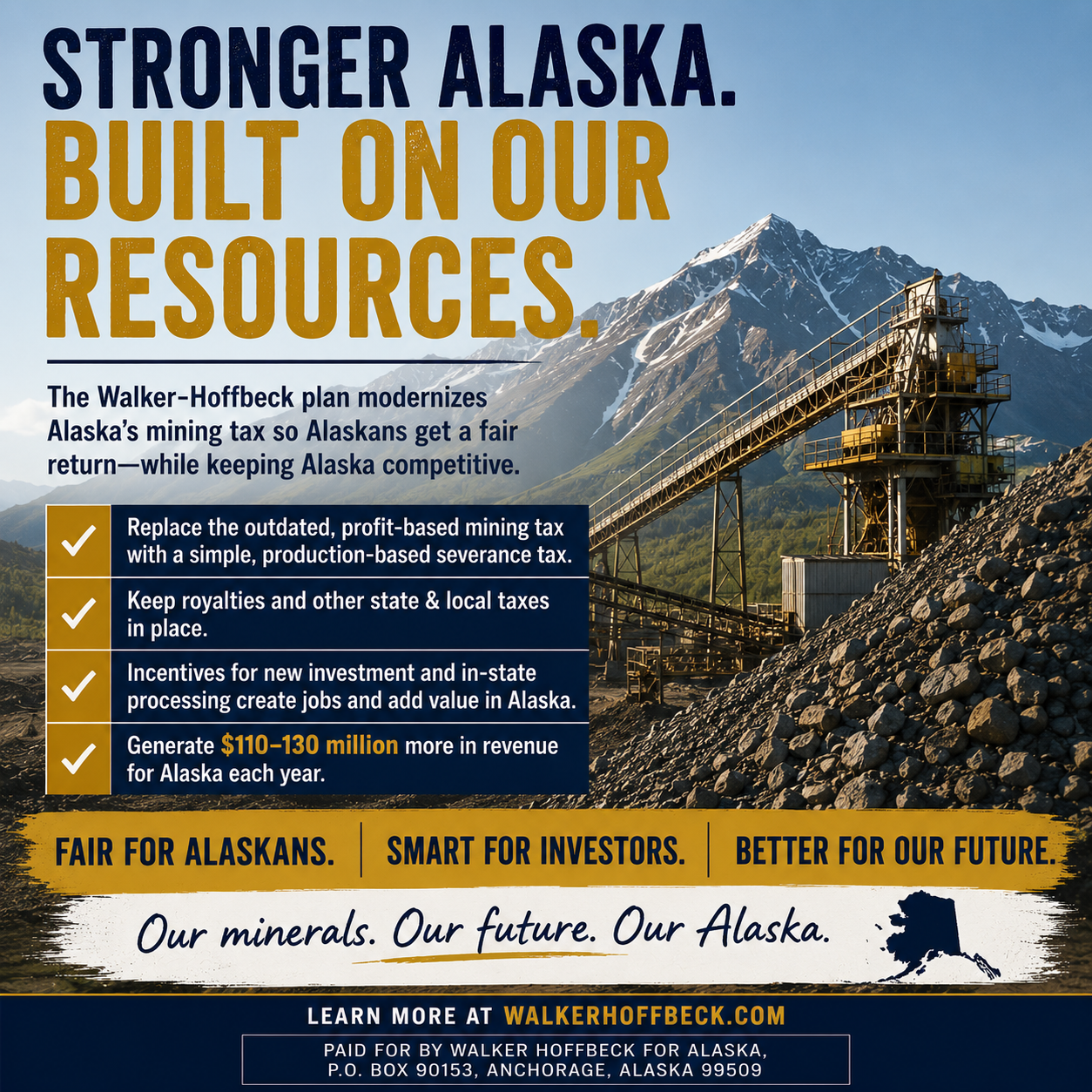
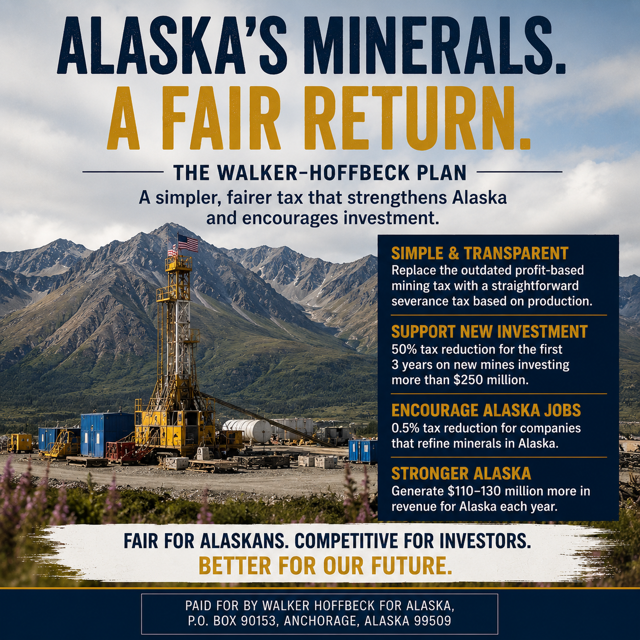
Replace the outdated Mining License Tax with a simple production-based severance tax.
Instead of relying on complicated profit calculations, the new tax would be based on the value of the minerals being produced using publicly available market prices and fixed tax rates.
Alaska’s existing royalty system and other state and local taxes would stay in place. This proposal updates one outdated part of the system, not the entire tax structure.
Supporting New Investment
Building a mine in Alaska requires hundreds of millions of dollars up front.
To encourage new mining projects, companies investing more than $250 million would receive a 50% reduction in the severance tax during their first three years of production. Beginning in year four, they would pay the full tax rate.
Encouraging Alaska Jobs
Companies that process or refine minerals in Alaska would receive a small tax reduction.
The goal is simple: create more Alaska jobs, encourage more value-added industries, and keep more economic activity here at home.
What This Means for Alaska
Based on today’s production levels and metal prices, the proposal is expected to generate$150–175 million each year.
After replacing the current Mining License Tax, the state is projected to receive approximately$110–130 million more every year than it does today.
The Benefits
This proposal would:
Replace an outdated tax with one that is simpler and easier to understand.
Make state revenues more predictable.
Reduce administrative complexity for both industry and government.
Encourage responsible mining investment.
Support more Alaska jobs through in-state mineral processing.
Provide Alaskans with a fair return from publicly owned resources.