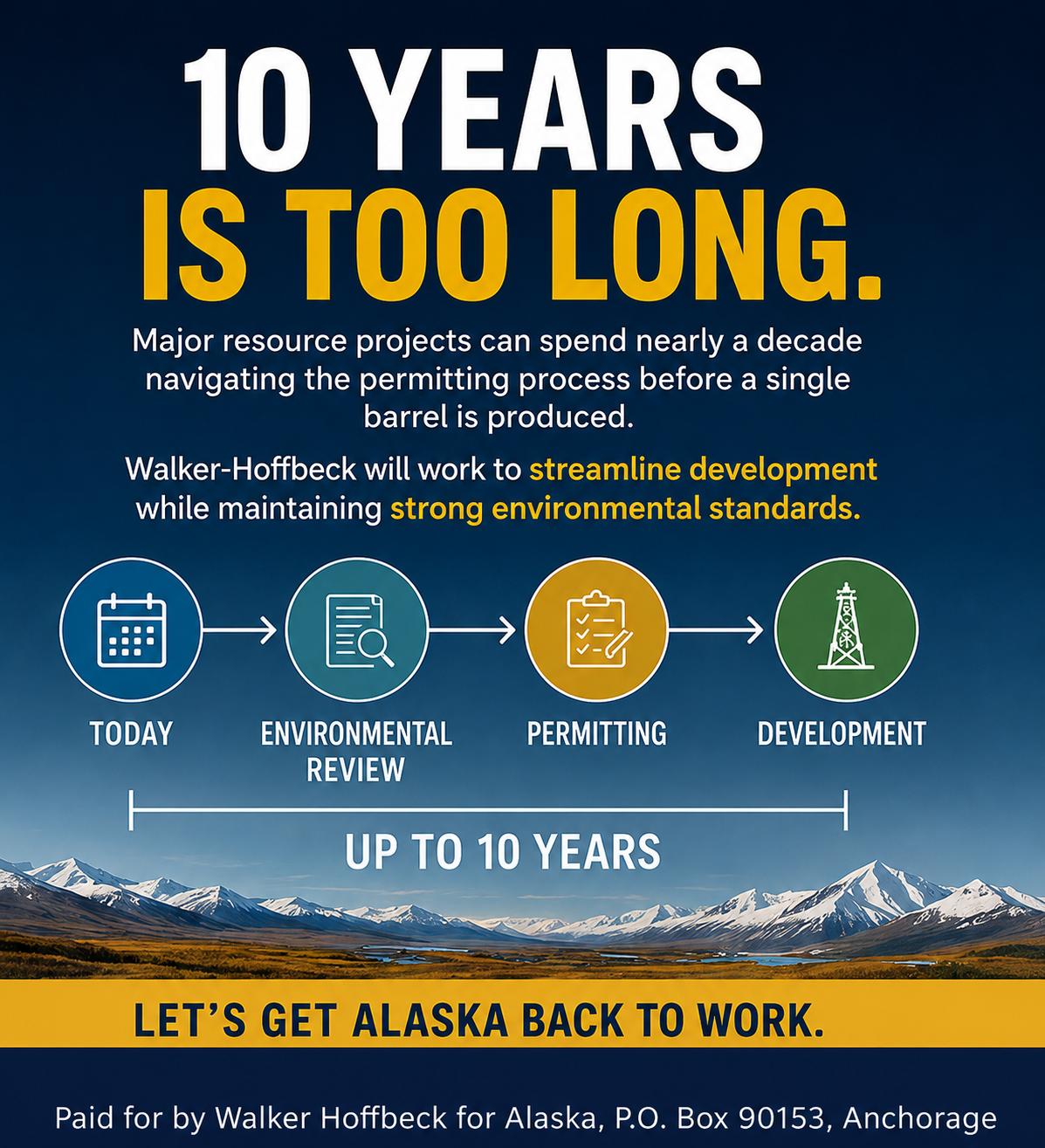
A New Approach to Resource Development in Alaska
I have always been a strong advocate for responsible oil and gas development in Alaska. When leasing opportunities became available in the 1002 Area of ANWR, I co-authored an opinion piece with Governor Frank Murkowski supporting AIDEA’s participation in the lease sale. I remain pleased that Alaska stepped forward.
As Governor, I met repeatedly with Interior Secretary Sally Jewell to advocate for development projects on Alaska’s North Slope, including Willow. Through those discussions, one reality became clear: the greatest obstacle to responsible development is often not the resource itself, but the lengthy and costly environmental review process required before production can begin.
Today, obtaining the permits necessary to develop a major oil project can take up to a decade and cost hundreds of millions of dollars. The Environmental Impact Statement (EIS) process is typically undertaken by individual companies, requiring them to make enormous investments long before they know whether a project will ultimately move forward.
Walker-Hoffbeck believes Alaska should take a different approach.
As an owner state, Alaska should lead and fund a comprehensive Environmental Impact Statement process for the National Petroleum Reserve-Alaska (NPRA) and the 1002 Area. This process must be inclusive and involve all affected stakeholders, including Alaska Native Regional Corporations, Village Corporations, local governments, subsistence users, and federal agencies.
By completing the environmental review process in advance, Alaska can create a pathway for responsible development that is both environmentally sound and economically competitive. Companies would be able to lease tracts that have already undergone environmental review and are ready for development, dramatically reducing uncertainty, shortening timelines, and encouraging greater investment.
Our current model depends on finding companies large enough to absorb years of regulatory delays and significant upfront costs. That limits competition and slows development.
Alaska has the most to gain from responsible resource development and the most to lose if opportunities are missed. We should not simply wait and hope private companies carry the burden of preparing areas for development. We should take the lead.